

Planning AGVs and automated storage: define the interfaces first
On this page
Define transport tasks
List origins, destinations, materials, load carriers, frequency, peaks and response requirements. Replenishment, finished-goods put-away, empty-carrier returns and rejected material may need different rules. Verify the stability of the process before automating it.
Standardize physical handovers
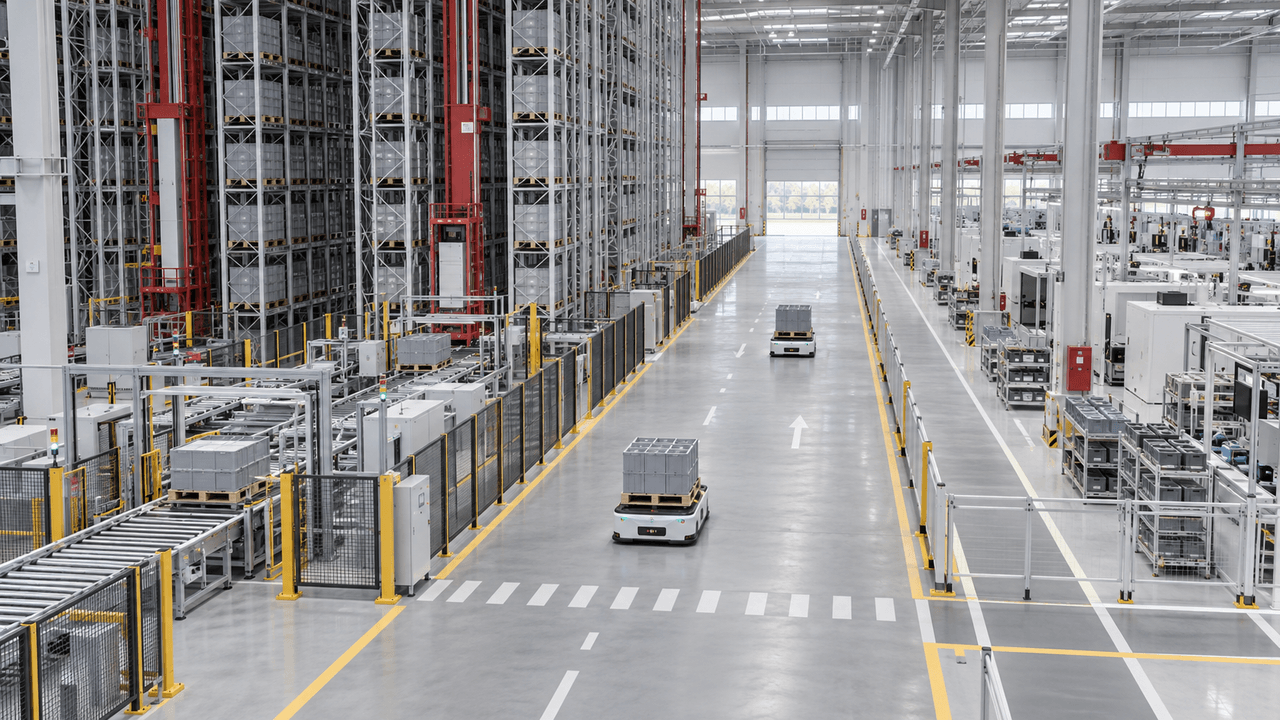
Agree pallet or tote dimensions, loading rules and positioning between vehicles, conveyors and storage equipment. Relevant specialists must assess load stability and interface constraints. Show transfer points, waiting areas, maintenance access and manual recovery locations. Evaluate crossings and risk controls, not only route length.
Assign system responsibilities
Define which information belongs to ERP, MES, WMS and equipment dispatch. Specify task creation, completion confirmation and duplicate prevention after failures. Align location, material, batch and carrier identifiers.
Document exceptions such as cancellations, offline equipment, blocked locations, urgent orders and stock discrepancies.
Test realistic variability
Assess arrival peaks, shift changes and partial equipment unavailability using appropriate simulation and staged trials. Include integration, maintenance, training and operating resources in the business case.
This article discusses planning methods, not equipment selection or safety approval. The illustration is an AI-generated concept.
Start with your question.
Exploring Factory Layout Planning? Use this article to discuss your business situation and the questions you want to clarify with a consultant.